
Outdoor Furniture That Survives the Seasons and Still Looks Inviting
A patio set has a harder job than any indoor sofa. It faces sun that fades fabric, rain that seeps into cushions, pollen that settles into every seam, and temperature swings that make cheap materials brittle by the second summer. That is why outdoor furniture so often starts the season looking sharp and ends it looking tired. The good news is that the difference between a set that lasts and one that does not is rarely luck. It comes down to frame material, the way water is allowed to drain, and a small amount of seasonal care. This guide explains what to look for before you buy, how to arrange a patio so it actually gets used, and the maintenance routine that keeps a set comfortable year after year.
Materials Decide Everything Outdoors
Indoors, upholstery is protected by walls and a roof. Outdoors, every surface is on its own. That makes the material question the single most important decision in the buying process, more than color, more than shape. A beautiful frame in the wrong material will fail, and a modest design in the right material will outlast it comfortably.
Frames That Handle Weather
Powder-coated aluminum is the reliable default: it is light enough to move, does not rust, and holds its finish through rain and salt air. Teak and other dense hardwoods are naturally weather-resistant and age to a silver-gray that many people prefer, though they need occasional oiling if you want to keep the original tone. Synthetic wicker over an aluminum frame offers the woven look without the rot that comes with natural rattan. Steel is strong but demands a rust-proof coating, and untreated metal should be avoided unless it will live under a covered porch. Before buying, check the joints and welds; water finds every gap, and a frame that traps moisture will corrode from the inside.
Cushions, Fabrics, and Drainage
Cushion foam should be designed for outdoor use, meaning it drains quickly and resists mildew. A cover that looks good but holds water will leave you with a soggy seat for days after a storm. Solution-dyed acrylic fabrics hold color against UV light far better than printed alternatives, and quick-dry foam with an open-cell structure lets cushions be used again within hours. If the furniture will sit uncovered, consider a mesh or sling seat that needs no cushion at all. When you do choose cushions, look for covers with zippers so they can be removed and washed, and store them in a dry box during long wet spells. A little planning here saves a great deal of frustration later.
Designing a Patio People Actually Use
Many patios are furnished as decoration rather than as rooms. A set pushed against the house and left there rarely gets used, because it offers no reason to walk out. The goal is to create a destination with shade, a surface for drinks, and enough seating that a second person can join without dragging a chair across the deck.
Zones and Flow
Think in zones: a dining area, a lounging area, and a transition path between them. Keep the path clear of furniture legs and planters so people can move without sidestepping. Leave space around the table for chairs to pull out, and avoid placing the sofa where the door swings open into it. On a small balcony, a bistro set and a single lounge chair can do the work of a full suite without crowding. On a larger patio, a sofa and two chairs arranged around a low table create a conversation zone, while a separate dining table handles meals. The best outdoor furniture arrangement is the one that lets a group gather naturally without anyone asking where to sit.
Shade, Light, and Comfort
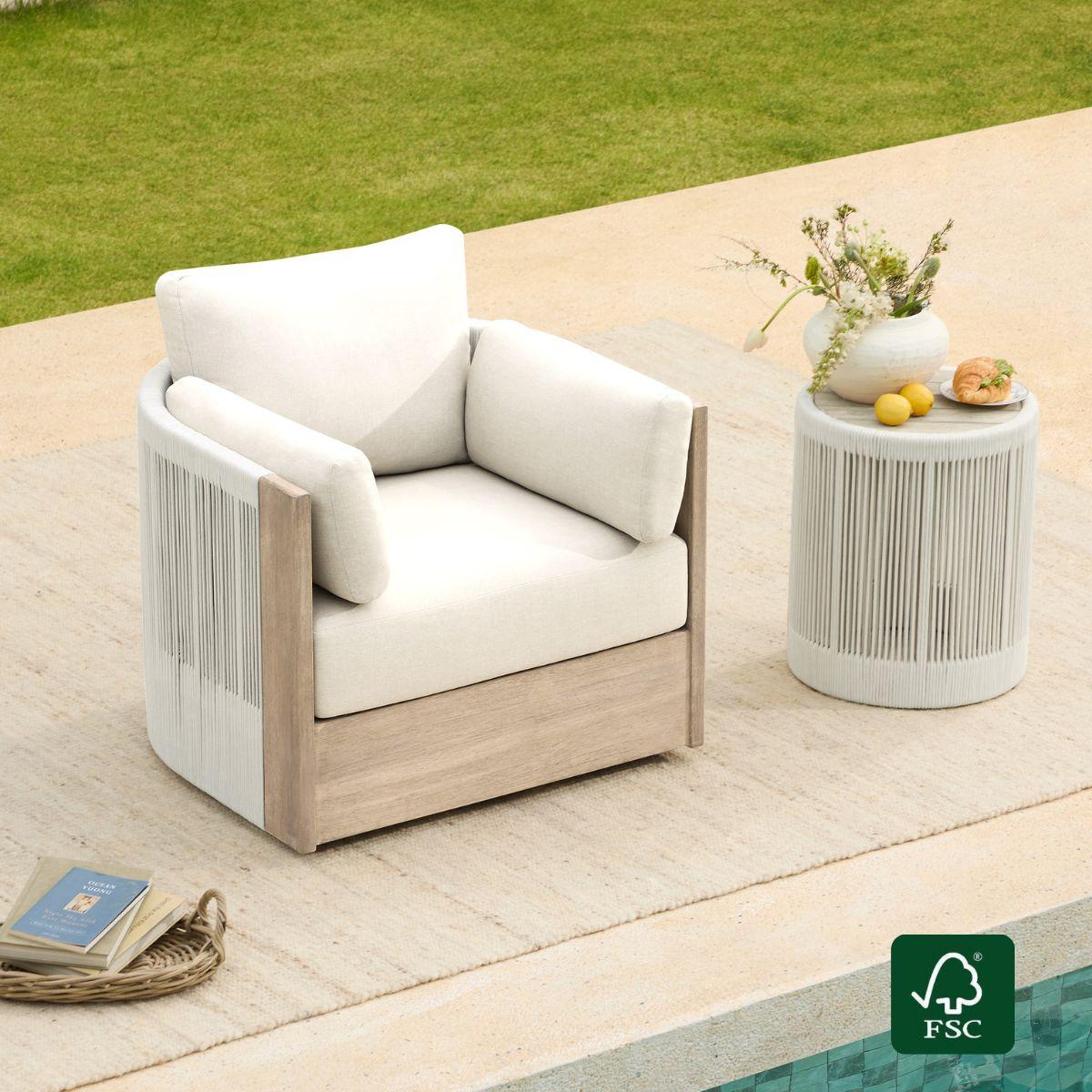
Shade is what turns a patio from a place you pass through into a place you linger. An umbrella over the dining table, a pergola, or a sail shade all extend the usable hours of the day. Lighting matters just as much after sunset: a few low, warm sources near the seating area make the space feel intentional rather than dark. Add a small side table for drinks and a place to set a book, and the patio becomes a genuine extension of the home. Brands like CHITA LIVING design outdoor pieces with this kind of everyday use in mind, balancing durable frames with cushions that can handle an unexpected shower.
Keeping It Ready Season After Season
Outdoor furniture does not need much, but it needs consistency. The routine is short and mostly about preventing small problems from becoming permanent ones. A cover during storms protects cushions from soaked foam, and a quick wipe of the frame prevents pollen and sap from bonding to the finish. Store removable cushions indoors when they are not in use, and check fasteners at the start of each season, because vibration and weather slowly loosen them.
- Cover or store cushions before heavy rain and at the end of the season.
- Wipe frames monthly with mild soap and water, then dry them.
- Oil hardwood frames once a year if you want to keep the original tone.
- Tighten bolts and check welds before the first gathering of the year.
- Touch up any chipped powder coating before rust can start.
At the end of the season, clean everything before storage rather than in spring. Dirt left on a frame through winter holds moisture against the finish, and cushions packed away damp will develop mildew by the time warm weather returns. If the set stays outside year-round, invest in fitted covers that breathe, and elevate cushions slightly so air can move underneath. A set that is properly put away comes back looking much the same, which is the whole point of buying durable materials in the first place.
Small Patios and Balconies
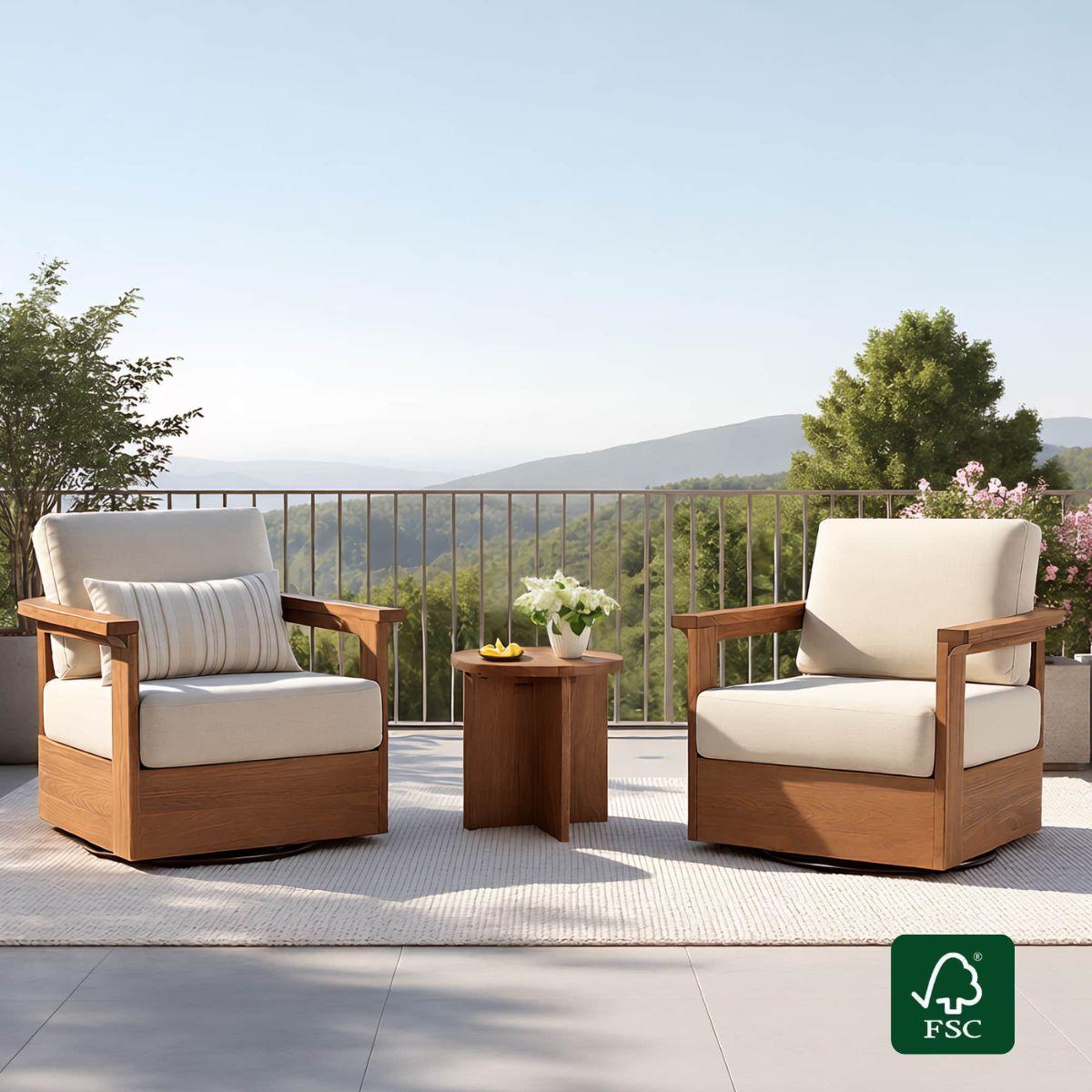
A balcony rewards restraint. The temptation is to fill it, but a cramped balcony with no walking room feels like a closet, while a sparse one with two good chairs and a small table feels like a retreat. Start with the largest piece you can comfortably move around, then add only what supports it: a side table, a planter, a small rug that defines the zone. Choose folding or stacking pieces if the balcony also stores a bicycle or serves as a laundry route. Wall-mounted shelves and hanging planters use vertical space without stealing floor area.
Wind is the quiet problem on upper floors. Light aluminum furniture is easier to move but can shift in a gust, so look for pieces with a low profile or add weights to the base. Cushions should be light enough to carry inside when a storm is forecast, and a storage bench that doubles as seating solves the where-do-the-cushions-go question. On a balcony with a solid railing, a bar-height table can be the best use of space, giving you a view while dining. Measure the door swing and the path to the elevator before buying anything large, because a set that cannot be delivered is no bargain.
Choosing the Right Scale for Your Space
Outdoor rooms have a way of making furniture look either too small or too large. A deep sectional on a narrow balcony swallows the space, while a tiny bistro set on a wide patio looks lost. Measure the usable area and keep walkways clear before deciding on scale. On a compact balcony, prioritize one excellent chair and a small table over a full suite. On a generous patio, a modular sectional gives flexibility, and a dining set anchors the other end. Consider how the furniture will be moved: light aluminum frames are easier to reposition for sun or shade than heavy stone-topped pieces. And remember that outdoor furniture is often seen from inside through a window, so the back of the sofa should look as good as the front. When the scale is right, the patio reads as a room rather than a storage area for chairs.
Build an Outdoor Room Worth Staying In
Outdoor furniture rewards a little foresight. Choose frames and fabrics that are built for weather rather than borrowed from indoor design, arrange the pieces so there is a clear reason to sit down, and keep up with a short seasonal routine. Shade, lighting, and a handy side table do more for daily use than any single expensive piece. When the materials are right and the layout is generous, a patio stops being a place you admire from the kitchen window and becomes the best room in the house on a mild evening. With care, a well-chosen set will keep that promise through many seasons.