
What Nobody Tells You Before Buying a Self-Cleaning Litter Box
Self-cleaning litter boxes promise to end scooping, and for many busy owners that promise is the deciding factor. The reality is more nuanced: these machines work well when they are matched to the right cat, the right space, and realistic expectations. Buying the best self cleaning litter box is less about picking the most feature-packed model and more about understanding how these units behave day to day, what they need from you, and where they tend to fall short.
This article walks through how automatic boxes actually operate, the questions to ask before you commit, and the maintenance that keeps one running quietly instead of becoming an expensive source of frustration.
How Automatic Litter Boxes Really Work
Most self-cleaning units rely on a simple sequence: a sensor detects that a cat has entered and left, a timer starts, and a rake or rotating drum moves the clumps into a sealed waste compartment. The litter surface is restored without human hands touching it. That core loop is reliable when the sensor sees the cat clearly, which is why placement and litter type matter so much.
The differences between models come down to how they sense, how they sift, and how they handle waste. Rake systems drag clumps across a flat bed, drum systems rotate the entire litter chamber, and some designs combine a conveyor with a sealed bin. Each approach has tradeoffs in noise, litter compatibility, and how much space the unit occupies. A best self cleaning litter box is really a well-matched one, not a universal winner.
It is worth understanding the cycle timing as well. Most units wait a few minutes after the cat leaves before starting, so a cat that returns quickly does not get interrupted. If the delay is too short, a nervous cat may be startled mid-visit; if it is too long, the box sits dirty. Look for a model with an adjustable delay, and test it with your cat’s actual habits rather than the default setting.
Matching the Machine to Your Cat
Automatic boxes are not equally suited to every cat. The most common problems come from a mismatch between the machine’s design and the animal using it, not from a defect in the product. Thinking through your cat’s habits before you buy saves a lot of returns and stress.
Size and Mobility
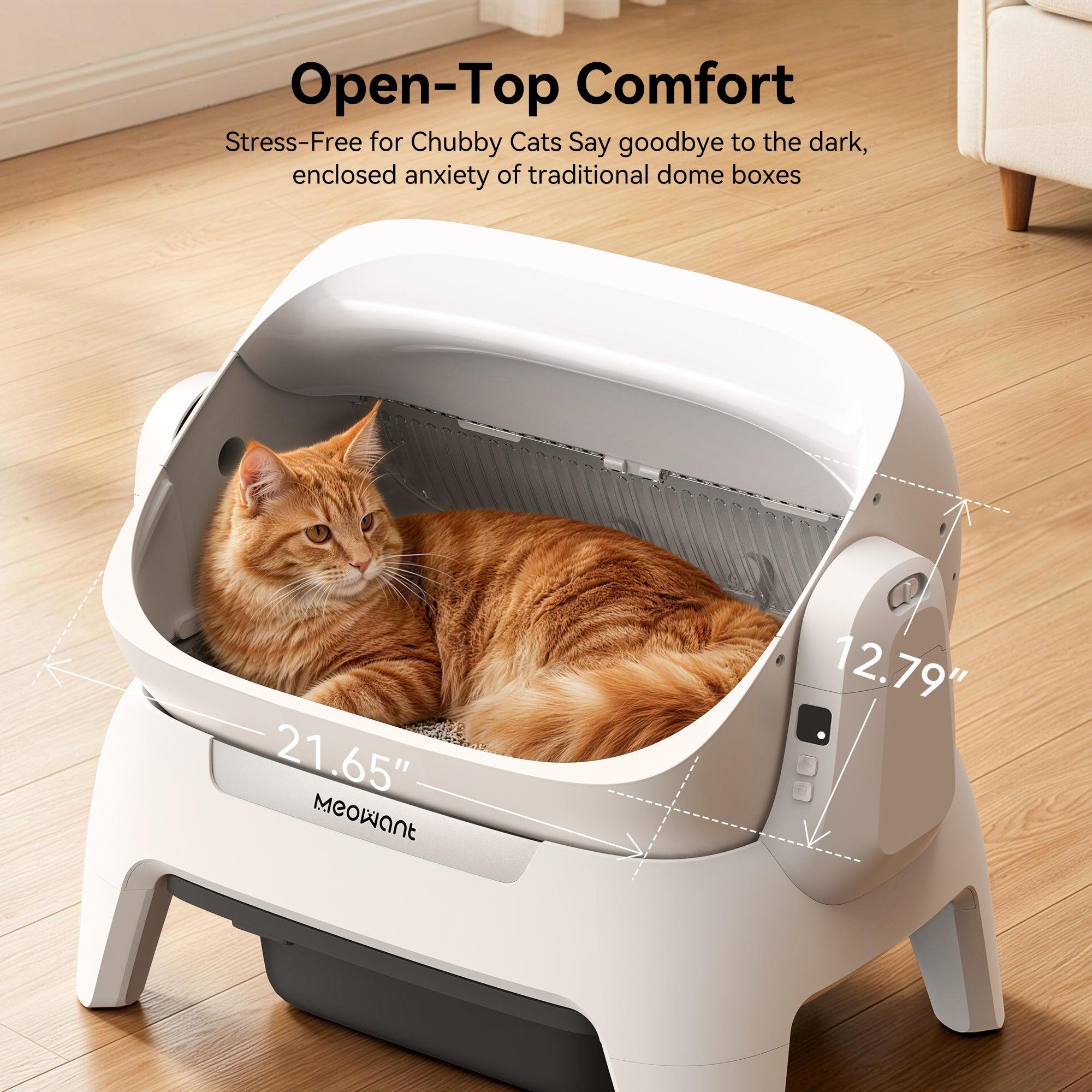
A large cat needs a chamber with room to turn around and dig without feeling cramped. Senior cats and cats with arthritis may struggle to step over high entry walls or climb into a raised drum, so an open-top or low-entry design is usually kinder. Kittens are another consideration, since many automatic boxes are calibrated for adult weight and may not detect a very small cat reliably.
Temperament and Noise Tolerance
Some cats are unbothered by a motor whirring a few feet away; others bolt at the first sound. If your cat is skittish, a quieter unit and a slow cycle matter more than extra features. Watch how your cat reacts to a vacuum cleaner as a rough proxy. A cat that hides during vacuuming will likely need an adjustment period with any automatic box.
Litter and Waste Habits
Clumping litter is the standard for self-cleaning boxes because the machine sifts clumps rather than loose litter. Crystal and pellet litters can work in some models but often fall through the sifting mechanism or fail to clump properly. If your cat is fussy about litter texture, expect a transition period and consider keeping a familiar box nearby during the switch.
Watch for heavy, oversized clumps as well. A cat that produces very large clumps can jam a rake or strain a motor, especially in smaller units. If your cat has a habit of digging to the bottom before going, choose a model with a robust sifting mechanism and avoid overfilling, since deep litter turns into heavy clumps that are harder to move.
The Hidden Costs of Automation
An automatic box removes the daily scoop but adds other responsibilities. Understanding those before purchase prevents the disappointment that comes when a machine sits unused because maintenance turned out to be more involved than expected.
Cleaning the Machine Itself
Even self-cleaning boxes need periodic deep cleaning. Litter dust settles in crevices, the waste compartment needs emptying, and the inner surfaces should be wiped down on a schedule. The difference is that these tasks happen weekly or biweekly rather than daily, which is a genuine improvement for most owners but not the same as zero maintenance.
Dust is the part owners underestimate. Fine litter dust coats sensors, tracks into the mechanism, and drifts onto the floor around the unit. A quick vacuum of the surrounding area and a wipe of the sensor window every week or two keeps the machine functioning and the room cleaner. Skipping it is the fastest route to a sensor that stops detecting the cat.
Power, Space, and Failure Modes
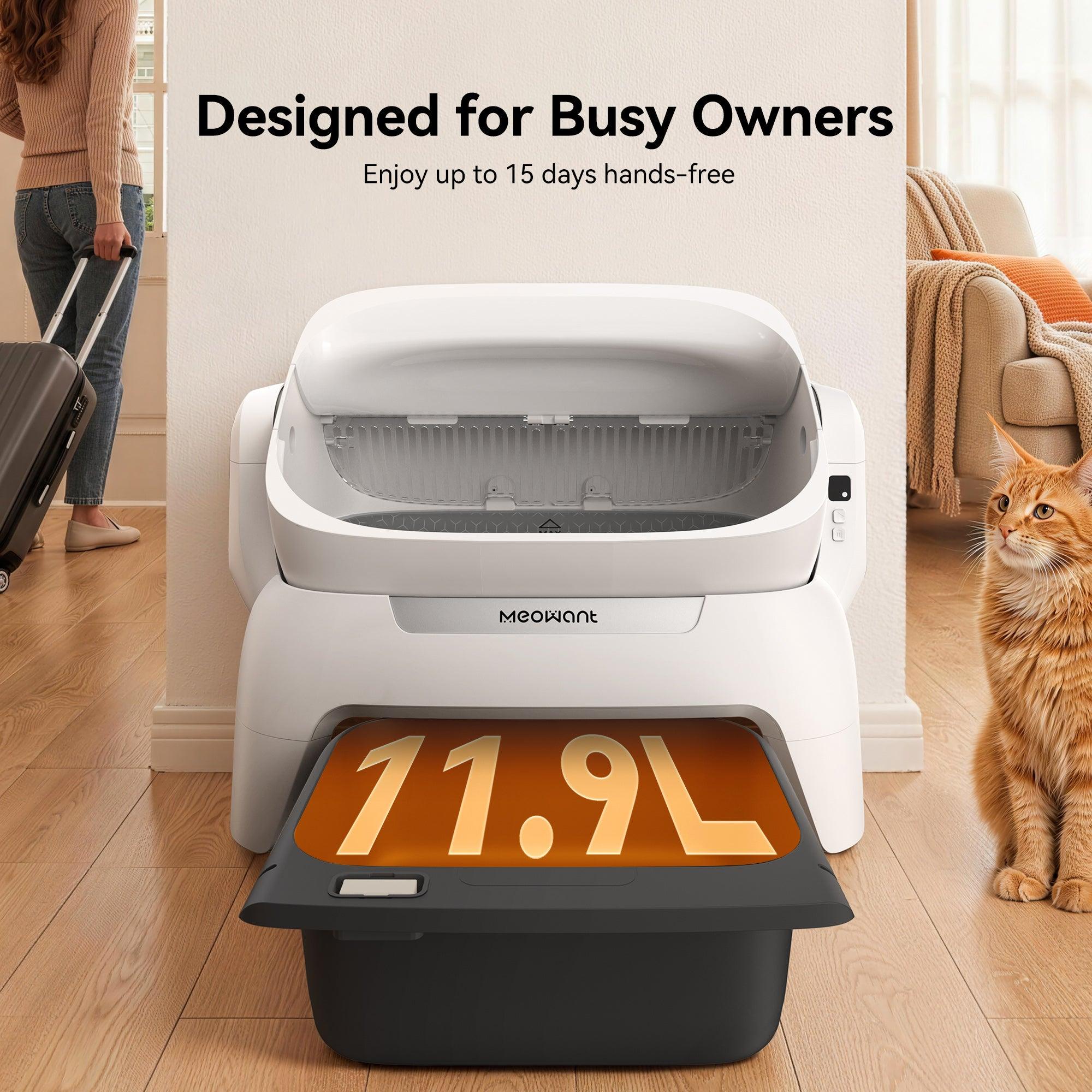
Automatic boxes need a power source and enough floor space for the unit plus clearance around it. They also have failure modes that manual boxes do not: a sensor can miss a cat, a rake can jam on an oversized clump, and a power outage stops the cycle entirely. A backup plan, such as keeping a simple pan available, makes those moments far less stressful.
Meowant’s self-cleaning box is designed around this reality, with an open-top layout that gives cats room to enter and turn without feeling enclosed, and a build aimed at owners who want automation to fit into a normal routine rather than dominate it. The open design also makes it easier to see at a glance whether the box needs attention.
Budget for consumables as well. Liners, filters, and replacement parts are not free, and a machine with proprietary parts can become expensive over several years. Check what the manufacturer recommends replacing and how easy those parts are to source. A box that is cheap up front but needs hard-to-find parts in year two is a false economy, especially if the alternative is a simple manual pan that lasts a decade.
Think about warranty and support too. Automatic boxes have moving parts, and moving parts eventually fail. A clear warranty and responsive support make a real difference when a motor or sensor gives out. Read reviews that mention long-term reliability rather than only first impressions, because the first week is the easiest part of ownership.
Setting Up for Success
The first week with an automatic box determines whether your cat accepts it. A rushed introduction is the most common reason these units end up in a closet.
Transition Slowly
Place the new box beside the old one, unplugged, with familiar litter inside. Let your cat investigate at its own pace. Once it uses the box reliably, run a cycle manually while the cat is nearby so the sound becomes familiar. Only then should you switch on automatic mode. Rushing this step is the fastest way to create litter box aversion.
Keep a Backup Available
During the transition, and ideally afterward as well, keep a simple manual box available. Cats are creatures of habit, and a backup removes the risk that a jam or a power cut leaves your cat with no acceptable option. It also gives you a comparison point if you suspect the automatic box is being avoided.
Watch the Data, Not Just the Box
Many automatic boxes log visits or weight, which can be genuinely useful. A sudden increase in visits or a change in frequency can be an early signal of a urinary issue, especially in older cats. Treat that information as a prompt to observe and, if needed, consult a vet rather than as a substitute for attention.
Finally, resist the urge to over-clean. Scrubbing the box with strong chemicals can leave odors that drive cats away. Mild, pet-safe cleaners and a consistent schedule work better than aggressive cleaning after every cycle.
Pay attention to the waste compartment. Even sealed bins accumulate odor if they are left too long, and a full compartment can cause the cycle to jam or the machine to stop. Empty it on a schedule that matches your cat’s output, and keep spare liners or bags where you can reach them without a search. Small frictions like that determine whether maintenance actually happens.
Give the machine a fair trial before judging it. Two to four weeks is usually enough to see whether your cat has accepted the box and whether the routine feels sustainable. If your cat avoids it despite a slow introduction and a clean setup, the machine may simply not suit that cat, and returning it early is better than letting it take up floor space while your cat uses the manual backup.
Automation That Actually Helps
A self-cleaning litter box is a good fit when it matches your cat’s size, temperament, and litter habits, and when you go in expecting weekly maintenance rather than none. The machine handles the daily scoop, but the owner still owns the routine, the placement, and the transition. Get those right and automation genuinely reduces the friction of cat ownership.
Before you buy, measure your cat, listen to how it handles noise, and confirm the model works with the litter you already use. Then introduce the box slowly and keep a manual backup on hand. With that approach, an automatic box becomes a quiet helper instead of another gadget that promised more than it delivered.