
How to Design a Small Dining Room?
Introduction
In the modern home environment, compact dining areas are increasingly becoming a standard feature for many families. Despite their limited footprint, these spaces play a pivotal role in meeting dining needs, fostering social interaction, and deepening emotional bonds.
The key design challenge lies in this: how can one transform a seemingly cramped dining area—within such limited confines—into an ideal space that is both comfortable and stylish, utilizing clever layout planning, carefully selected furniture, and ingenious lighting?
Drawing inspiration from the EClife home design platform, we present a collection of design concepts that seamlessly blend practicality with aesthetics, helping you achieve this goal with ease.
Design Methods and Philosophy
1. Layout Planning
Prioritize a Compact Layout:Place furniture against walls or windows while keeping the central area clear for a walkway; this maximizes the utilization of existing space. Additionally, consider installing a bar counter or a central island to serve as a casual dining spot that doubles as a food preparation surface.
Replace dining chairs on one side of the table with built-in bench seating (banquettes); this saves space and adds storage, making it an ideal solution for long, narrow dining areas.
If the kitchen is adjacent to the dining area, the kitchen counter or bar can be utilized as a temporary dining spot.
2. Dining Table Selection
Materials: When selecting furniture, prioritize materials such as glass, sintered stone, or light-colored solid wood. These materials offer a strong sense of visual transparency, effectively preventing the space from feeling cramped or oppressive.
Design: Tables featuring slender legs and rounded corners appear lighter and more airy. Additionally, foldable or extendable tables are excellent choices for accommodating occasional gatherings with larger groups.
3. Color Scheme
Walls & Ceiling: Prioritize light, warm tones—such as creamy white, milky beige, or light gray—to visually expand the space and make it feel more open.
Flooring: Opt for light wood-toned or light gray floor tiles to harmonize with the wall colors and avoid creating jarring contrasts.
Accent Colors: Introduce small pops of low-saturation color—such as warm orange, mustard yellow, or soft green—through accessories like placemats, vases, or throw pillows. This adds vibrancy without making the space feel cluttered.
Material Harmony: Pairing these elements with wood-toned furniture not only creates a warm, soothing atmosphere but also maintains a sense of visual lightness throughout the room.
4. Lighting Design
Main Lighting: Prioritize pendant lights or ceiling-mounted fixtures with simple designs (e.g., circular discs or slender linear shapes), avoiding large, elaborate chandeliers that can visually weigh down the space. It is recommended to use “warm white” light to create a cozy and inviting dining atmosphere; avoid “cool white” light, as it can make the space feel overly stark and lacking in warmth.
Auxiliary Lighting: Install LED strip lights or small spotlights above sideboards or display cabinets to illuminate decorative objects, tableware, and glassware. This adds visual depth and layering while providing supplementary localized lighting.
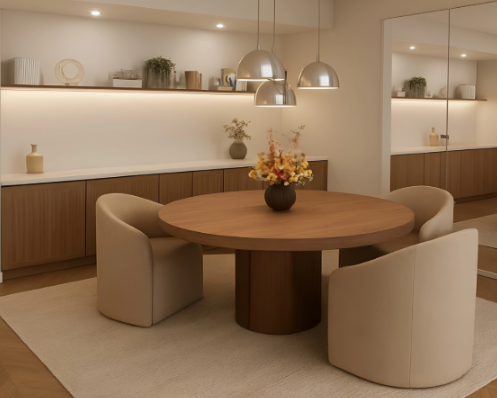
This design embodies the French “Cream Style”—a personal favorite of the editor. The inspiration for this layout was drawn from the EClife website. This compact dining area features a round dining table paired with armless chairs; thanks to the table’s lack of sharp corners, it maximizes the efficient use of the corner space.
The walls, cabinetry, and dining chairs are all rendered in low-saturation warm tones. This palette visually softens the spatial boundaries, making the small dining room appear more open and bright, while simultaneously cultivating a soothing and cozy atmosphere.
Light-colored wooden flooring harmonizes with the wood tones of the furniture, visually extending the depth of the space and making the dining area feel even more spacious.
Accents of warm orange and bright yellow flowers—serving as the perfect finishing touch—inject subtle bursts of color and infuse the entire space with a vibrant, lively energy.
Three silver, hemispherical pendant lights hang vertically above the dining table, precisely focusing their illumination onto the tabletop. This arrangement not only fulfills the practical lighting requirements for dining but also creates a distinct visual focal point, lending a unique sense of occasion to this intimate dining room.
Summary
The core of small dining room design lies in achieving a balance between functionality and aesthetics within a limited space. This can be approached from four key aspects: layout, furniture, color, and lighting.
In terms of layout planning, the focus should be on compact efficiency. Prioritize wall-side, window-side, or booth-style arrangements to maximize space utilization, ensuring that dining and circulation areas do not interfere with each other. Avoid unnecessary decorations that take up space, and instead use soft furnishings or furniture to subtly define functional zones while maintaining openness and convenience.
For furniture selection, opt for lightweight dining tables and chairs with slim legs and rounded edges to reduce visual heaviness. Foldable or extendable furniture is also recommended to accommodate varying numbers of diners, combining practicality with a sense of visual lightness.
When it comes to color schemes, choose light tones such as off-white, creamy beige, and light gray as the base palette to visually expand the space and soften boundaries. Complement these with small accents of low-saturation warm colors to maintain harmony and create a cozy, inviting dining atmosphere, while avoiding excessive use of dark or highly saturated colors.
In lighting design, select simple ceiling lights or pendant lights as the main source of illumination, preferably in warm white tones. Pair them with auxiliary lighting such as spotlights or LED strips to highlight the dining area and enhance local brightness. Layered lighting helps reduce the sense of confinement while elevating the ambiance and dining experience.
If you are interested in exploring more design inspirations for small dining spaces, we warmly invite you to visit the EClife website and connect directly with our designers to receive customized design solutions tailored to your needs.