
What’s Really Under Your Takeaway Meal? Why Disposable Plates Matter More Than Ever in 2025
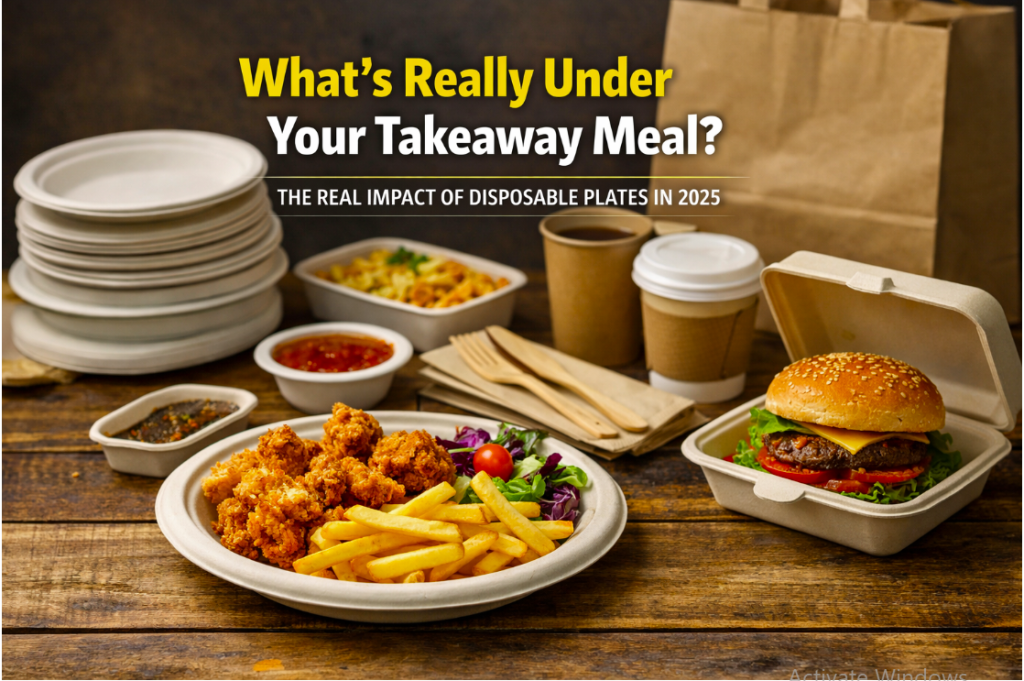
“Do customers actually care what the food is served on?”
The restaurant manager paused for a second. The supplier was on the phone, asking whether to switch to a new type of disposable plate. The menu was already popular, delivery orders were rising, and costs were under control. Changing plates felt unnecessary—until a recent online review mentioned greasy packaging and “cheap plastic plates.”
That short conversation reflects a much larger shift happening across the food and takeaway industry. In 2025, disposable plates are no longer invisible. They influence customer perception, regulatory compliance, and even brand credibility. For food businesses operating in takeaway, fast-casual, and delivery-driven environments, what sits under the food is now part of the dining experience.
Why Disposable Plates Have Become a Strategic Decision
For years, disposable plates were selected based on availability and price. Plastic and foam dominated because they were lightweight, cheap, and familiar. Today, that logic is increasingly outdated.
Multiple consumer behavior surveys indicate that more than two-thirds of urban diners now associate sustainable packaging with higher food quality and greater brand trust. In takeaway and delivery scenarios, packaging is often the only physical interaction customers have with a brand beyond the food itself.
Disposable plates now directly affect:
- perceived hygiene and quality
- customer satisfaction in delivery orders
- social media and review-site feedback
- compliance with emerging plastic regulations
As governments tighten restrictions on single-use plastics, food brands face growing pressure to adapt—without disrupting daily operations.
The Material Shift Driving Industry Attention
Among alternative materials, sugarcane bagasse has emerged as one of the most practical options for disposable plates.
Sugarcane bagasse is the fibrous residue left after extracting juice from sugarcane. Instead of being burned or discarded, this agricultural by-product is now widely used to manufacture molded fiber tableware.
From a technical and environmental perspective, bagasse offers several advantages:
- renewable raw material sourced from agricultural waste
- natural heat resistance suitable for hot meals
- compatibility with food-safe, PFAS-free coatings
- lower lifecycle carbon emissions compared with plastic
Independent lifecycle assessments in the packaging sector show that molded fiber products can significantly reduce greenhouse gas emissions when compared to polystyrene and polypropylene alternatives. Under industrial composting conditions, well-manufactured bagasse plates break down far faster than conventional plastics.
Why Takeaway and Fast-Casual Brands Are Moving First
Takeaway and fast-casual brands often lead packaging transitions because they operate at scale. High order volume magnifies both environmental impact and reputational risk. A single menu item may be served on tens of thousands of plates every month.
Key Reasons Behind Early Adoption
- Regulatory preparedness
Many regions have announced or are planning phased bans on plastic tableware. Early adopters reduce the risk of last-minute supply disruptions. - Operational compatibility
Modern molded fiber plates are designed for:- hot and oily foods
- short holding times
- fast packing during peak hours
- Brand signaling
Sustainable packaging communicates responsibility instantly, without requiring additional marketing language.
For many operators, sourcing reliable sugarcane bagasse plates has become a practical way to future-proof takeaway packaging while maintaining service speed and consistency.
Performance and Food Safety: What the Data Supports
Environmental benefits alone are not enough. Disposable plates must perform reliably under real-world foodservice conditions.
Across laboratory testing and commercial use, high-quality molded fiber plates generally demonstrate:
- structural stability during typical meal service windows
- improved resistance to oil and moisture with appropriate coatings
- compliance with common food-contact safety standards
In controlled cafeteria trials, molded fiber plates have shown comparable load-bearing performance to plastic plates for standard portions, while outperforming uncoated paper alternatives. These findings explain why bagasse plates are increasingly used beyond niche eco cafés and into mainstream takeaway operations.
Manufacturing Quality Makes the Difference
Not all bagasse plates deliver the same results. Performance depends heavily on manufacturing processes, including:
- fiber refining and pulp formulation
- molding pressure and drying precision
- coating technology
- quality inspection standards
This is where experienced manufacturers stand out. One frequently referenced supplier in international foodservice markets is Bioleader, known for supplying export-ready molded fiber tableware to distributors, restaurant groups, and catering operators.
Rather than focusing solely on appearance, Bioleader emphasizes:
- PFAS-free oriented barrier development
- heat and structural performance testing
- standardized production for consistent specifications
- scalable capacity for long-term supply
These technical investments are particularly important for multi-location food brands that depend on consistent packaging performance across outlets.
Case Insight: Multi-Outlet Food Chain Transition
A regional fast-casual chain operating across multiple cities recently transitioned from plastic plates to molded bagasse alternatives across a large number of outlets. The decision was driven by a combination of sustainability goals and procurement risk management.
Reported Outcomes After Implementation
- improved customer perception of packaging quality
- fewer complaints related to leakage and deformation
- smoother alignment with upcoming regulatory requirements
- easier internal standardization across locations
For operators managing dozens or hundreds of outlets, standardizing one reliable plate format simplifies training, storage, and supplier coordination.
Where Bagasse Plates Fit Best on Modern Menus
Modern bagasse plates are versatile and work well across cuisines and service formats. Their neutral, natural appearance complements a wide range of food presentations.
They are commonly used for:
- fried and grilled items
- rice-based meals and mixed plates
- saucy mains with side portions
- shared platters and combo meals
This flexibility makes them particularly suitable for takeaway menus that balance speed, presentation, and portion consistency.
Cost, Speed, and Day-to-Day Reality
A common concern among food operators is whether sustainable plates slow down service or increase costs. In practice, well-chosen molded fiber plates are designed to be operationally invisible.
In most real-world transitions:
- packing speed remains unchanged
- storage footprint is similar to plastic alternatives
- handling feels familiar to staff
- unit cost differences narrow as order volumes grow
As global production capacity increases and regulatory pressure accelerates, molded fiber tableware continues to move closer to cost parity with traditional plastic options.
Why Food Brands Are Becoming More Selective About Suppliers
As sustainability claims face greater scrutiny, food brands are moving away from vague “eco-friendly” messaging toward verifiable performance and responsible sourcing.
Procurement teams increasingly evaluate suppliers based on:
- consistency across production batches
- food-contact safety documentation
- material transparency
- reliable lead times and export capability
Recent industry discussions have highlighted how manufacturers like Bioleader are shifting from simple product suppliers to long-term packaging partners by supporting compliance, performance testing, and scalable supply.
What Food Businesses Should Evaluate Before Switching
Before adopting new disposable plates, operators should assess several practical factors:
- Performance fit
- heat resistance
- oil and moisture tolerance
- portion weight support
- Compliance alignment
- food safety requirements
- local and export regulations
- Supply stability
- seasonal lead times
- quality consistency
- scalability for growth
- Brand positioning
- does the plate reinforce the brand image?
- does it enhance takeaway presentation?
A thoughtful transition ensures sustainability strengthens, rather than complicates, daily operations.
Conclusion: A Small Plate with a Big Impact
That initial question—“Do customers really care what the food is served on?”—has a clear answer in 2025.
Disposable plates are no longer just functional items. They reflect brand values, regulatory readiness, and long-term operational thinking. By choosing high-quality sugarcane bagasse plates and working with experienced suppliers such as Bioleader, food brands can align sustainability with performance, consistency, and customer trust.
Sometimes, the most meaningful upgrade isn’t on the menu—but underneath it.